


Beyond the Bowl: Part 5 — Processed Diets and the Whole-Foods Matrix
Beyond the Bowl: Part 5 — Where Highly Processed Diets May Fall Short
We are back with Part 5 of our weekly series alongside behavioral neuroscientist Dr. Pepe Hernandez. Last week, we looked at how acetylcholine builds the chemical infrastructure for attention and memory retention. This week, we are looking at how food processing affects those delicate systems. We are diving into where commercial processing can create behavioral inconsistencies, and why matching a diet to an individual dog's digestive and neurological needs matters.
Where Highly Processed Diets May Fall Short
By Dr. Pepe Hernandez, PhD, CPDT-KA
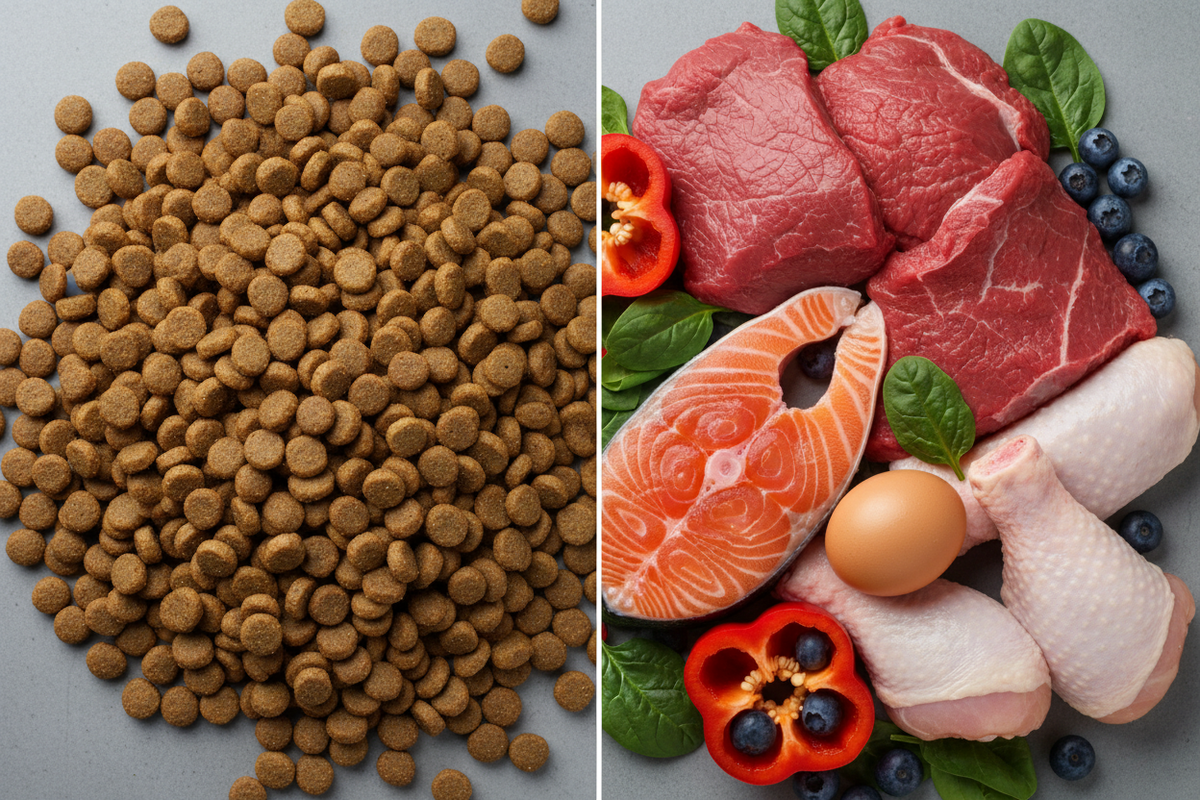
Not all processed dog foods are the same, and not every commercial diet is poor quality. Many dogs do well on complete-and-balanced commercial foods, especially when those diets are digestible, appropriate for the dog’s life stage, and well tolerated. The concern is not processing as a category. The concern is what can happen when a diet is heavily processed, poorly matched to the dog, low in high-quality protein, poorly tolerated, or built around ingredients that do not support that individual dog’s digestive and neurological needs.
The Role of Starch and Carbohydrates
Some kibble diets contain substantial carbohydrate levels because starch is useful for extrusion and shelf stability. Carbohydrates are not automatically harmful, and many dogs tolerate them well. But for dogs who appear metabolically sensitive, digestively uncomfortable, or behaviorally inconsistent after meals, the quality and amount of carbohydrate, protein, fat, fiber, and overall formulation may matter. Sustained attention is harder when a dog is uncomfortable, over-aroused, under-recovered, or physiologically strained.
The Impact of Thermal Processing
Heat processing can also affect some nutrients and food structures, while supplementation can restore essential nutrient levels in a complete commercial diet. That does not make every processed food nutritionally inferior. It does mean that ingredient quality, digestibility, formulation standards, storage stability, and individual tolerance all matter.
The Developing Science of the Microbiome
The gut microbiome adds another layer. The gut and brain are in constant conversation, and reviews of canine gut microbiota suggest possible links between microbial communities and behavior-related outcomes such as anxiety, aggression, and cognition, although this field is still developing and causality is not yet fully established [1,2]. Diet can meaningfully alter the canine fecal microbiome, but the effects vary by formulation, dog, and study design [3,4].
The practical point is simple: if the diet is not supporting digestion, nutrient availability, energy stability, and overall comfort, training may be harder than it needs to be.
Next Week: Part 6 — The Raw Difference: Nutrients That Support a Trainable Brain.
References
- Kięłbik, P., et al. (2024). The relationship between canine behavioral disorders and gut microbiota. Animals, 14(14), 2048. DOI
- Crisante, A., Newberry, F., & Clegg, S.R. (2025). A critical review of research concerning the gut microbiome in dogs and its relationship with behavior. Applied Animal Behaviour Science, 292, 106755. DOI
- Xu, J., et al. (2021). The fecal microbiota of dogs switching to a raw diet only partially converges to that of wolves. Frontiers in Microbiology, 12, 701439. DOI
- Hiney, K., et al. (2024). Fecal microbiota composition, serum metabolomics, and inflammatory markers in dogs fed kibble or raw meat-based diets. Frontiers in Veterinary Science, 11, 1328513. DOI